Jellyfish
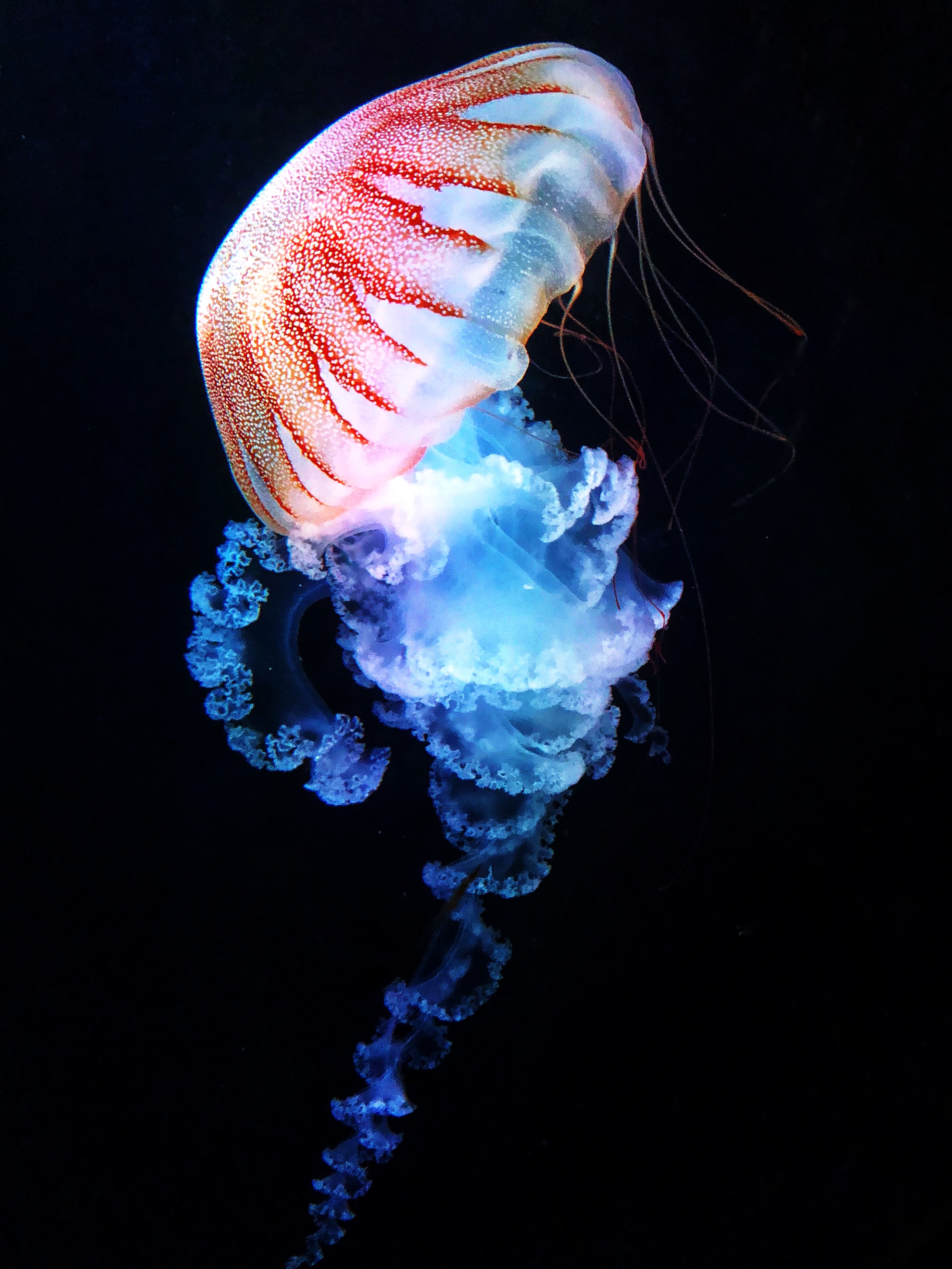
Jellyfish have drifted along on ocean currents for millions of years, even before dinosaurs lived on the Earth. The jellylike creatures pulse along on ocean currents and are abundant in cold and warm ocean water, in deep water, and along coastlines. But despite their name, jellyfish aren't actually fish—they're invertebrates, or animals with no backbones.
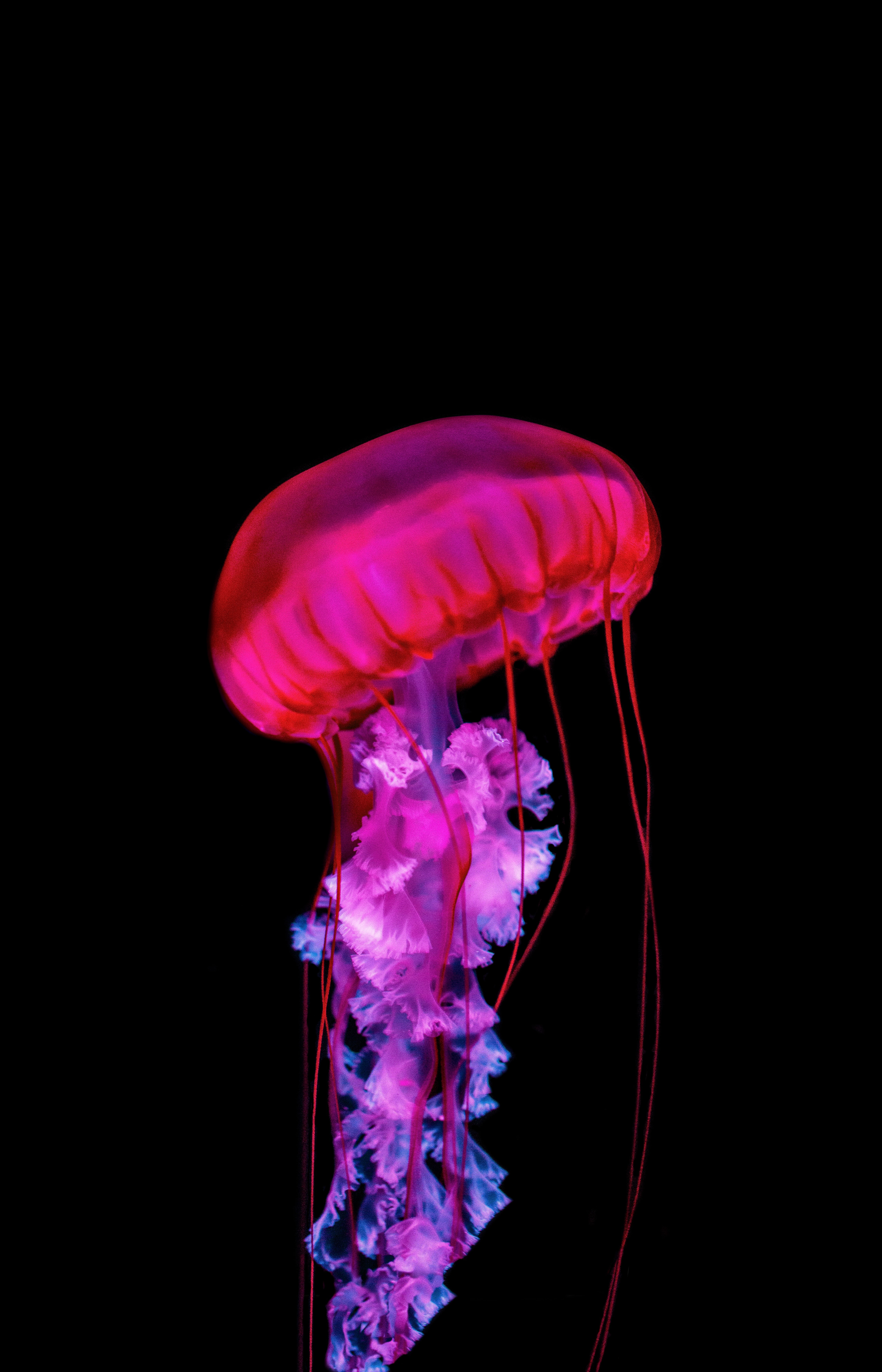
Jellyfish have tiny stinging cells in their tentacles to stun or paralyze their prey before they eat them. Inside their bell-shaped body is an opening that is its mouth. They eat and discard waste from this opening. As jellyfish squirt water from their mouths they are propelled forward. Tentacles hang down from the smooth baglike body and sting their prey.
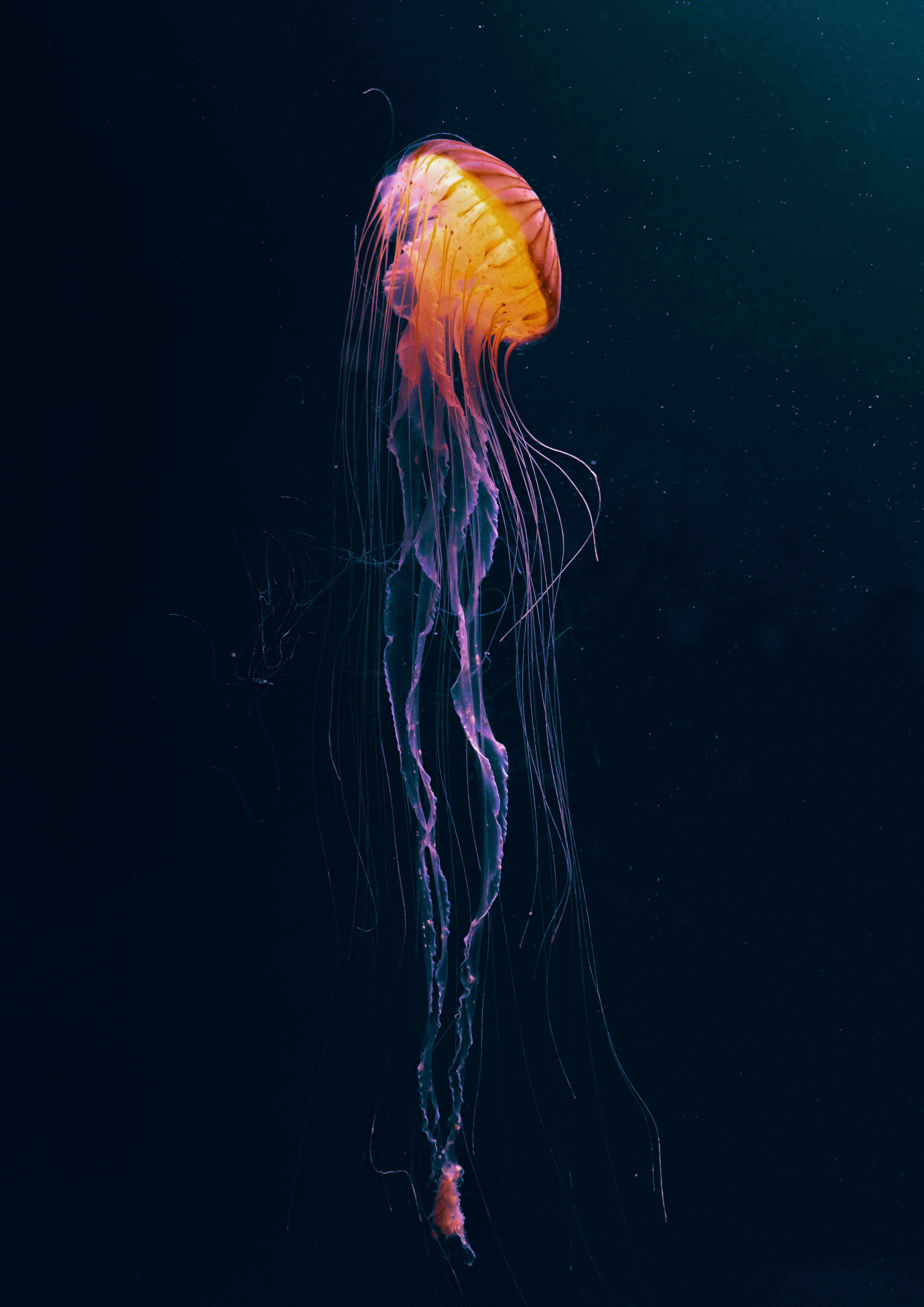
Jellyfish stings can be painful to humans and sometimes very dangerous. But jellyfish don't purposely attack humans. Most stings occur when people accidentally touch a jellyfish, but if the sting is from a dangerous species, it can be deadly. Jellyfish digest their food very quickly. They wouldn't be able to float if they had to carry a large, undigested meal around.
Jellyfish Species
Box Jellyfish
Box jellyfish are cnidarian invertebrates distinguished by their box-like body. Some species of box jellyfish produce potent venom delivered by contact with their tentacles.
Moon Jelly
Moon jellyfish are one of the most common jellyfish and can be found in coastal waters of all oceans except the Arctic Ocean.
Blue Jellyfish
A typical looking jellyfish, with a dome-shaped bell and stinging tentacles trailing underneath.
Starfish
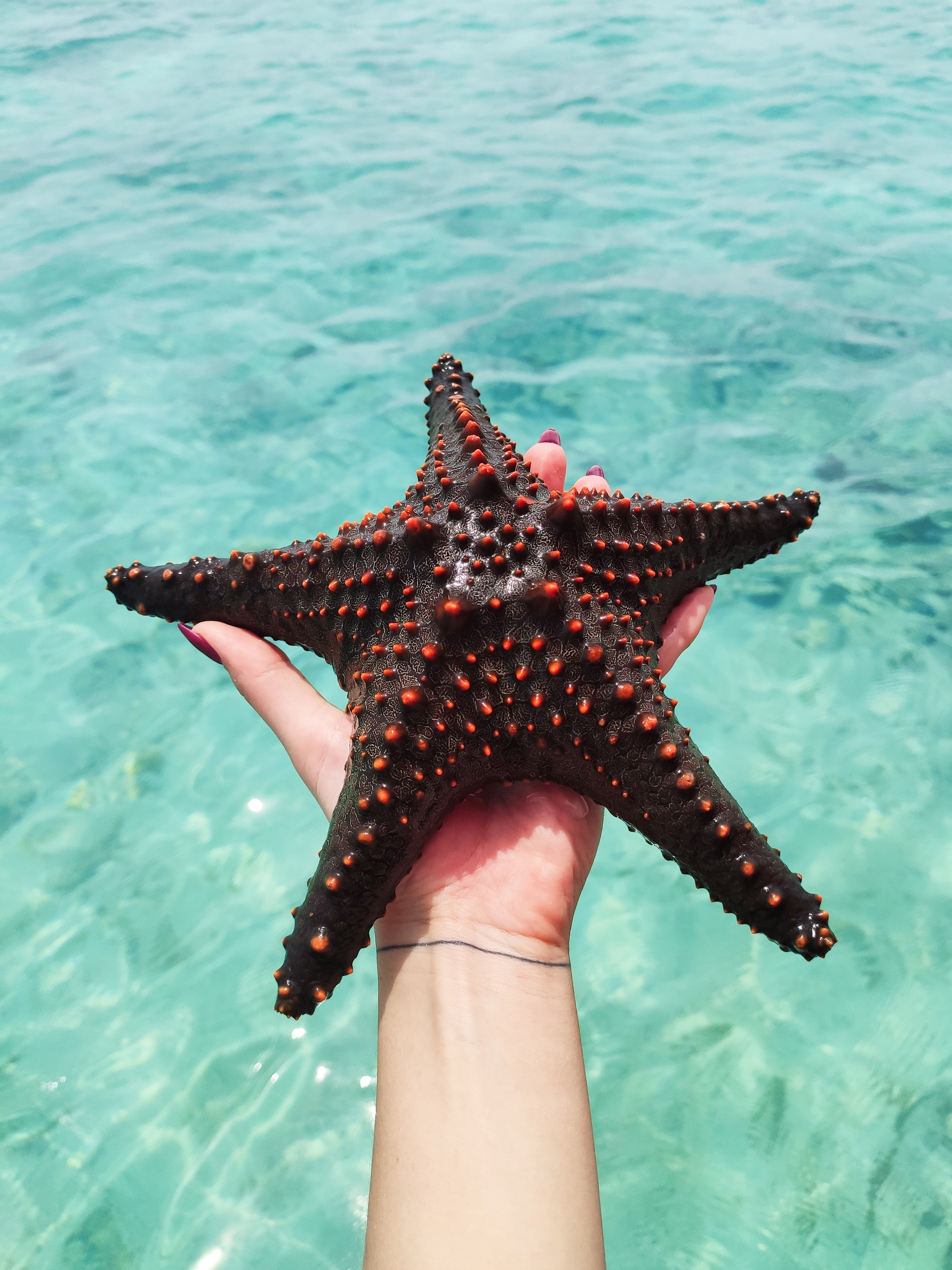
About 1,900 species of starfish occur on the seabed in all the world's oceans, from warm, tropical zones to frigid, polar regions. They are found from the intertidal zone down to abyssal depths, at 6,000 m (20,000 ft) below the surface.
Back to the Top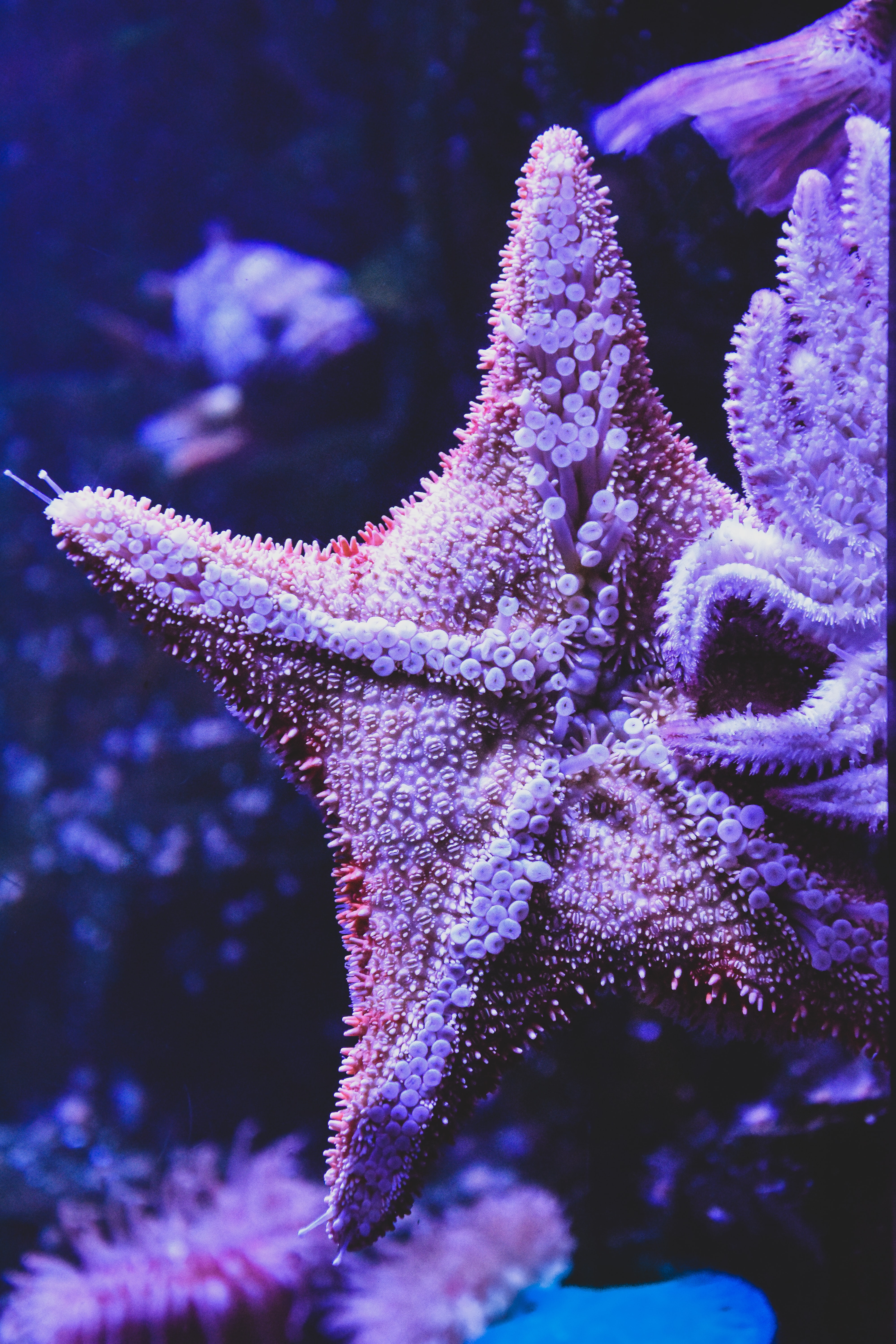
Starfish are marine invertebrates. They typically have a central disc and usually five arms, though some species have a larger number of arms. The aboral or upper surface may be smooth, granular or spiny, and is covered with overlapping plates.
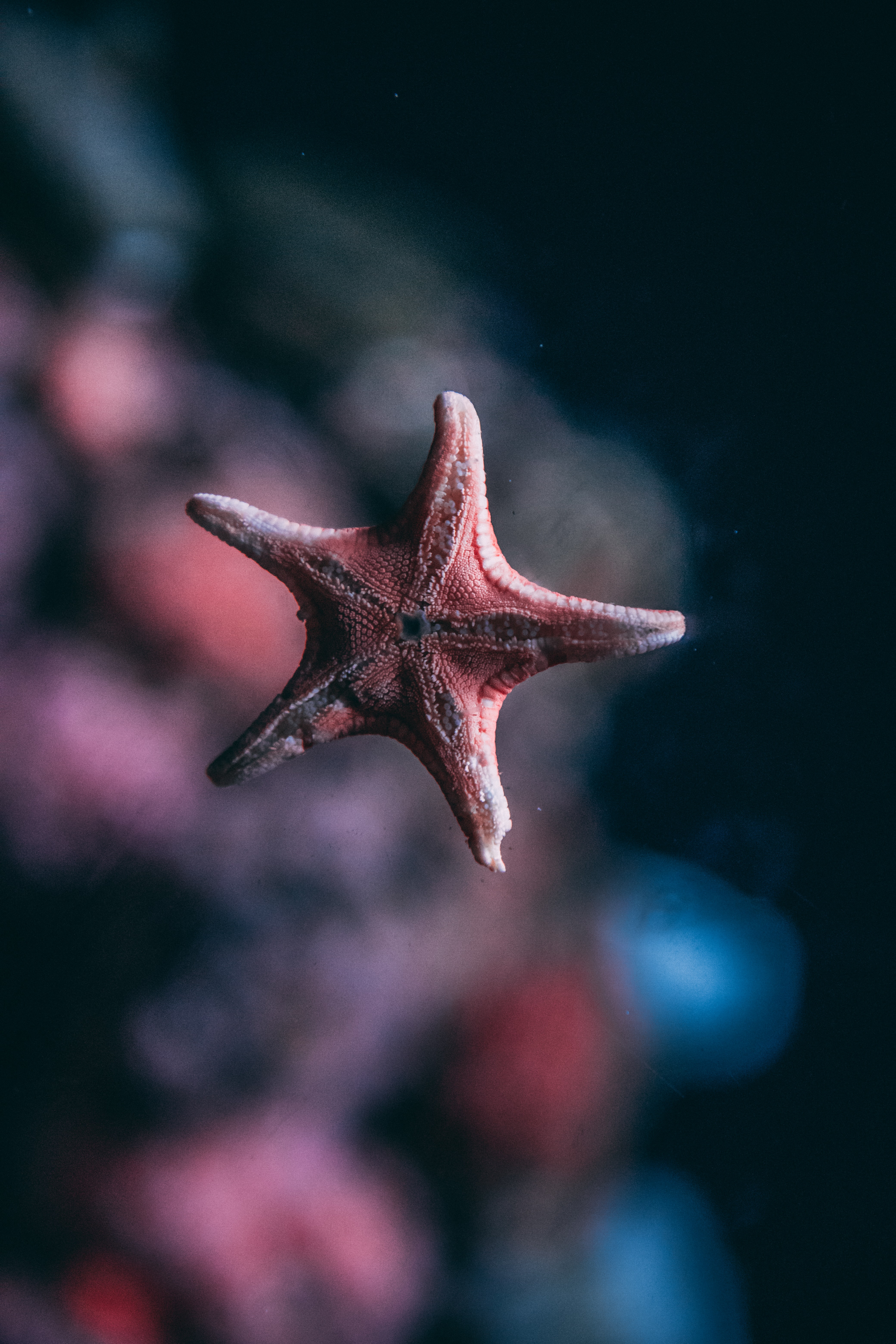
Many species are brightly coloured in various shades of red or orange, while others are blue, grey or brown. Starfish have tube feet operated by a hydraulic system and a mouth at the centre of the oral or lower surface.
Starfish Species
Common Sea Star
The common starfish, common sea star or sugar starfish is the most common and familiar starfish in the north-east Atlantic. Belonging to the family Asteriidae, it has five arms and usually grows to between 10–30 cm across,
Sunflower Sea Star
The sunflower star (Pycnopodia helianthoides) is the largest sea star in the world, reaching an arm span of more than three feet.
Choriaster
Choriaster starfish prefer to live in warm shallow waters and can exist both alone or living in a group amongst coral sponges and rubble slopes.
Seahorse
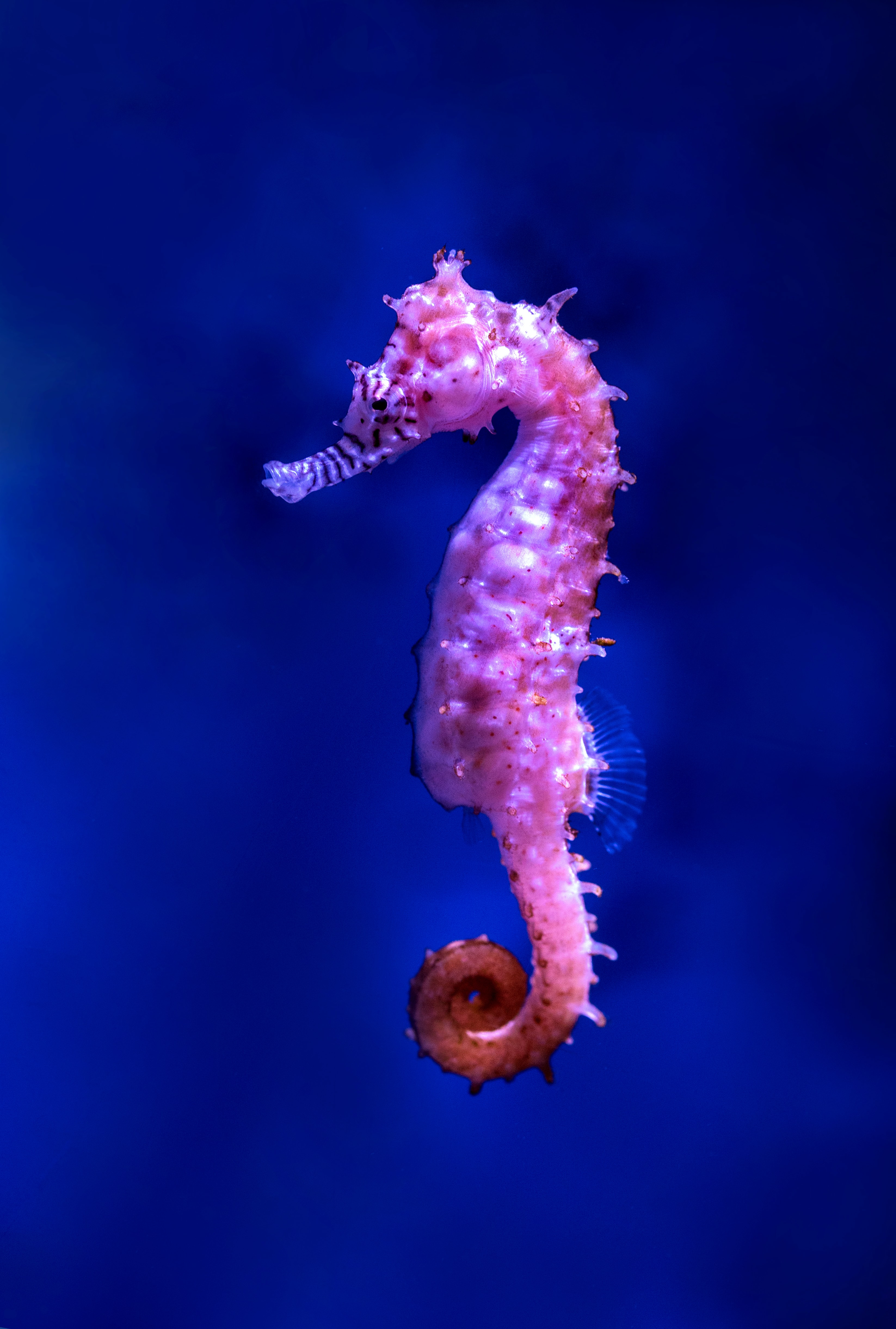
Seahorses are fish. They live in water, breath through gills and have a swim bladder. However they do not have caudal fins and have a long snake-like tail.
Back to the Top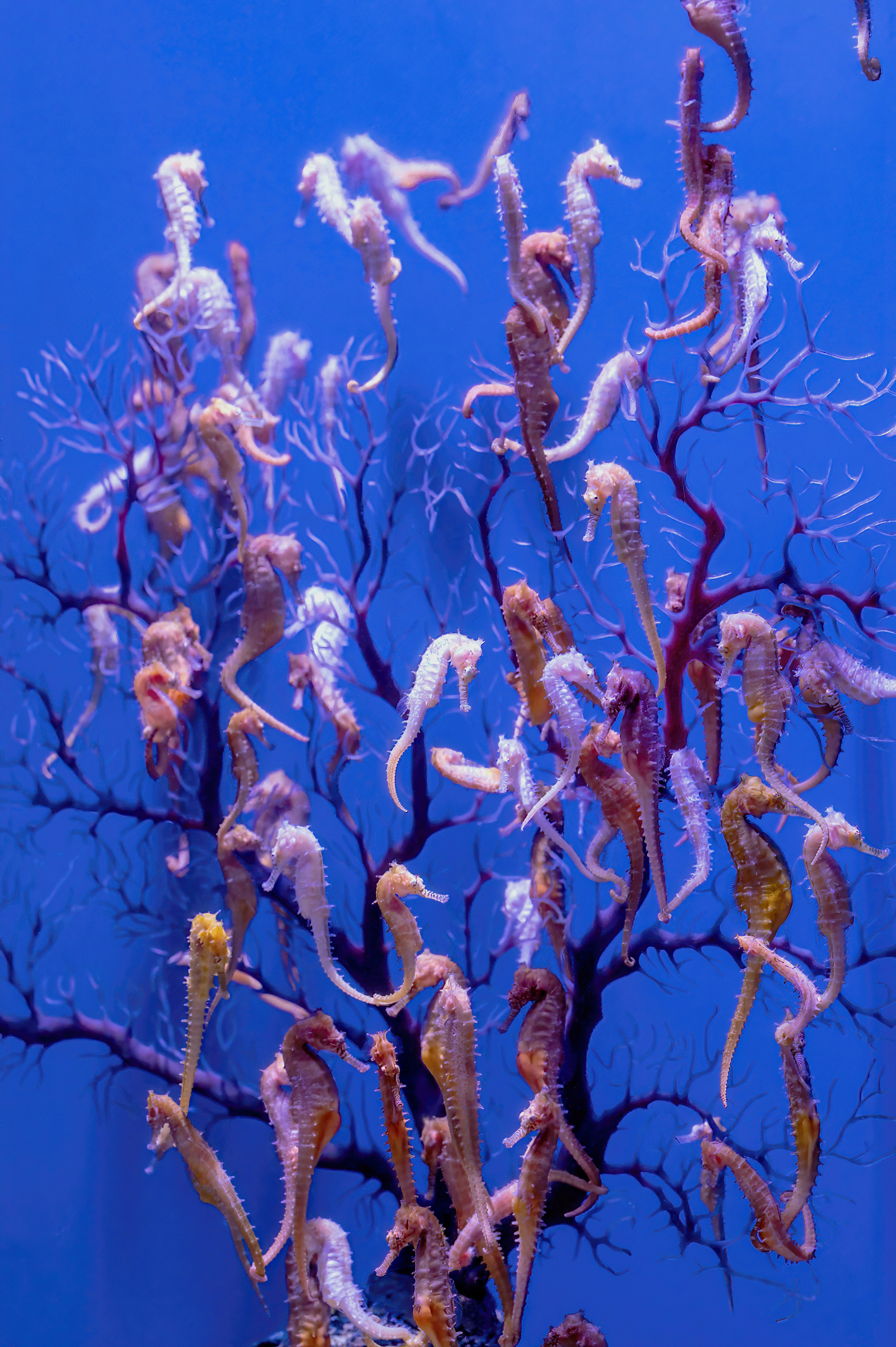
Seahorses eat small crustacea such as Mysis Shrimp. An adult eats 30-50 times a day. Seahorse fry (baby seahorses) eat a staggering 3000 pieces of food per day.
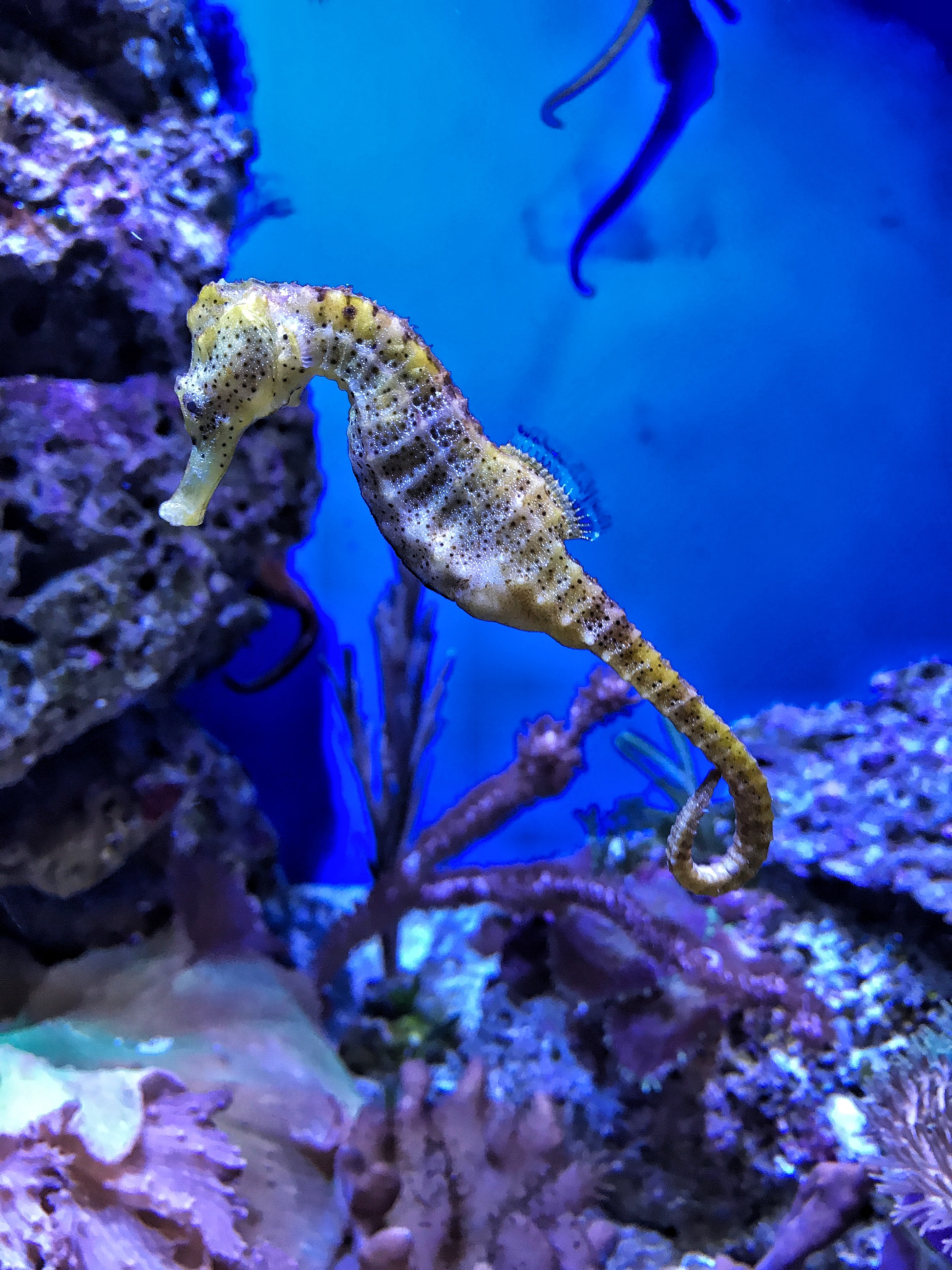
It was always thought that Seahorses pair for life but research by The Seahorse trust has shown that pair bonding is just for a few months or a season at a time. They meet first thing in the morning to reinforce their pair bonding with an elaborate courtship display.
Seahorse Species
Dwarf Seahorse
The dwarf seahorse is a species of seahorse found in the subtidal aquatic beds of the Bahamas and parts of the United States. It is threatened by habitat loss. According to Guinness World Records, it is the slowest-moving fish.
Spiny Seahorse
The spiny seahorse, also referred to as the thorny seahorse, is a small marine fish in the family Syngnathidae, native to the Indo-Pacific area.
Longsnout Seahorse
The longsnout seahorse is also known as the slender or Brazilian seahorse. They can grow up to about 7 inches long.